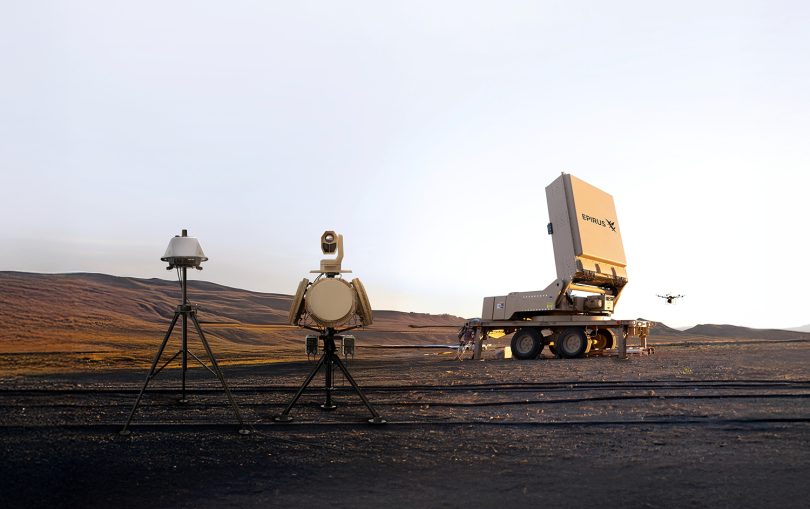

As drones become more common in modern warfare, so does the need to stop them. From small FPV drones to large loitering munitions, unmanned aerial threats are now a major challenge on the battlefield.
One of the most advanced solutions to this problem is the Leonidas counter-drone system, a weapon that uses high-power microwave (HPM) technology to disable drones electronically rather than destroying them physically.
In this article, we’ll explore how the Leonidas system works, what makes it unique, and why high-power microwave weapons are becoming an important part of modern counter-drone defense.
What Is the Leonidas System?
The Leonidas system is a directed-energy counter-drone weapon developed by the Epirus, a U.S.-based defense technology company.
Instead of using missiles or bullets, Leonidas emits powerful bursts of microwave energy that disrupt or destroy the electronic systems inside drones.
This makes it especially effective against:
- drone swarms
- FPV attack drones
- loitering munition drones
- small unmanned aerial systems (sUAS)
How High-Power Microwave Weapons Work
Electronic Disruption Instead of Physical Impact
The Leonidas system uses high-power microwave pulses to overload the electronic components of a drone.
These pulses can:
- disable onboard computers
- disrupt communication systems
- damage flight controllers
- shut down navigation systems
Unlike traditional weapons, the drone doesn’t need to be physically hit. Instead, it is electronically neutralized.
Area Effect Against Multiple Targets
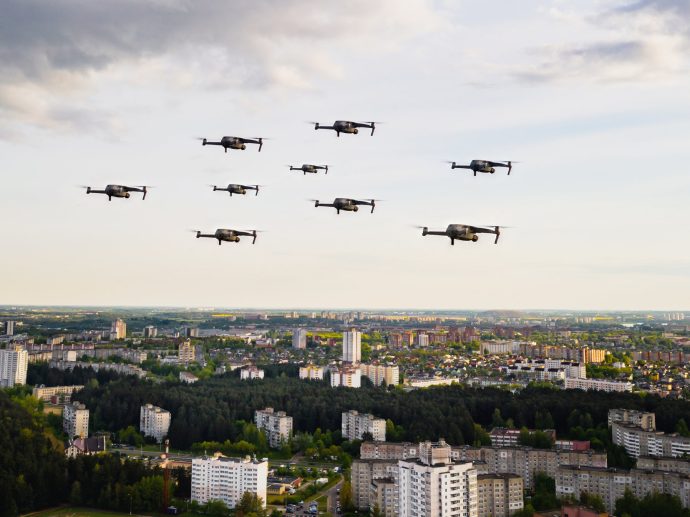
One of the biggest advantages of HPM systems is their ability to affect multiple drones at once.
Instead of targeting a single UAV, Leonidas can:
- disable entire drone swarms
- protect wide areas
- respond instantly to multiple threats
This is especially important as modern warfare increasingly involves mass drone deployments.
Why Leonidas Is Important in Modern Warfare
The rise of drone warfare—especially in conflicts like Ukraine—has shown how difficult it is to defend against large numbers of low-cost UAVs.
If you want to understand how drones are used in real conflicts, read our case study on drone warfare in Ukraine.
Leonidas addresses several key challenges:
1. Cost Efficiency
Traditional air defense systems are expensive. Using missiles to shoot down cheap drones is often not sustainable.
HPM systems offer a lower cost-per-engagement, especially against swarms.
2. Speed of Response
Microwave weapons operate at the speed of light, allowing immediate engagement of threats.
3. Effectiveness Against Swarms
Unlike kinetic systems, Leonidas can neutralize multiple drones simultaneously, making it ideal for swarm scenarios.
Leonidas vs. Traditional Counter-Drone Systems
Kinetic Systems
- use bullets or missiles
- require precise targeting
- limited to one target at a time
Electronic Warfare (Jamming)
- disrupts communication signals
- less effective against autonomous drones
- can be bypassed
High-Power Microwave Systems (Leonidas)
- disable electronics directly
- affect multiple drones
- effective even against autonomous systems
Role in Countering Modern Drone Threats
As drone technology evolves, so do countermeasures.
Modern threats include:
- AI-assisted drones
- fibre-optic controlled drones (resistant to jamming)
- loitering munition systems
👉 Learn more about loitering munition drones.
👉 Explore AI military drones.
Because HPM systems target electronics directly, they remain effective even when traditional jamming fails.
Advantages of the Leonidas System
✔ Non-Kinetic Defense
No need for physical interception.
✔ Scalable
Can be deployed for base defense or mobile operations.
✔ Effective Against Swarms
Handles multiple threats simultaneously.
✔ Reduced Collateral Damage
Targets electronics rather than causing explosions.
Limitations and Challenges
Despite its advantages, the Leonidas system also has limitations:
Range Constraints
Microwave systems have limited effective range compared to missiles.
Power Requirements
High energy output requires significant power supply.
Line-of-Sight Dependency
Effectiveness may be reduced by obstacles or terrain.
The Future of Counter-Drone Technology
High-power microwave systems like Leonidas represent a new generation of defense technology.
Future developments may include:
- integration with radar and AI detection systems
- mobile battlefield deployment
- combined use with lasers and kinetic defenses
- automated counter-drone networks
As drone threats continue to evolve, systems like Leonidas will likely play a key role in protecting military and critical infrastructure.
Conclusion
The Leonidas counter-drone system shows how warfare is shifting toward electronic and directed-energy solutions.
By using high-power microwaves to disable drones, it offers a powerful alternative to traditional air defense systems—especially in a world where drone swarms are becoming increasingly common.
As both drone technology and countermeasures evolve, systems like Leonidas highlight the growing importance of electronic warfare and advanced defense technologies in modern conflict.